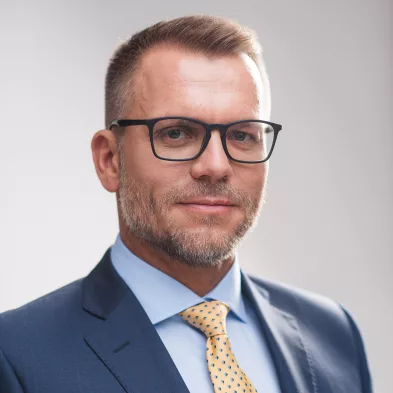
Why has it happened? To clear up the situation, Latifundist.com addressed a Hero of Ukraine, NIBULON’s General Director Oleksiy Vadaturskyy.
Latifundist.com: What was the reason for a crisis with grain transportation?
Oleksiy Vadaturskyy: As a manager with extensive experience I can say there hasn’t been such a situation with grain transportation in Ukraine yet. I understand why it has happened. “Reformers” became the management of “Ukrzaliznytsia”. They live by themselves and “Ukrzaliznytsia” exists independently. At present there is no transitional period to adopt new management methods without economic losses.
Lack of unity led to the fact that railcars became unclaimed. Nobody takes care of rolling stock; it is quickly transferred to management of certain companies. There is no a state approach to control the railcar fleet of “Ukrzaliznytsia”. In this case, there is no coordination with the companies in charge of which the railcars are. This is an example of corruption at “Ukrzaliznytsia”. I am asked by many officials whether there is corruption at railways. I answer in the negative as no one demands me to pay. We have to use railcars through commercial structures and it is more expensive by USD 3-5 per ton. In fact, this is hidden corruption at the railway.
Latifundist.com: What can you say about constant statements of “Ukrzaliznytsia” about lack of railcars to transport the yield?
Oleksiy Vadaturskyy: There are railcars in Ukraine. There are enough railcars to export volumes higher than today’s ones by 2-3 times. I talk about our company, for example a route from Reshetylivka (Poltava region) to Mykolaiv and return route. We spend 3–3 and a half days to perform one rolling stock turnover.
“Ukrzaliznytsia” states the rolling stock turnover comprises 4-5 days. I don’t believe this. We have analyzed and established that their rolling stock turnover comprises 10-12 days; thus, the railcars are used inefficiently. As a result there has been a rise by USD 3-5 per one ton; railcars are less effectively used; an artificial shortage of railcars is created. One should pay for this shortage.
Latifundist.com: The statements made by “Ukrzaliznytsia” about lack of railcars serve as a cover for shadow railcars division, don’t they?
Oleksiy Vadaturskyy: There are railcars but there is no proper control, plus obstruction of the new management. The best traditions of railroad management are lost. The management gets a good reward for work and their employees search for a chance to earn. They do earn by working with logistics companies which have raised the price for transportation. Everything is good for them: there are no railcars, but there is a shortage, a stable demand, and rising costs.
Latifundist.com: Is the hype around grain transportation artificially created?
Oleksiy Vadaturskyy: Yes. This is the result of incompetent management of “Ukrzaliznytsia”. Our company honestly made a request for 2594 railcars for October. We got 432 ones and it comprised 16.6 % of our demand. We requested 2722 for November and got 161 (5.9 %). If we had got the railcars requested for a month, we would have fulfilled our plan of 184 thousand tons.
One more fact: railcars, even loaded ones, stay for 4-5 days. For example, at Svatove station (Luhansk region). It turns out that if Vadaturskyy didn’t pay and isn’t involved in corruption, then we will punish him. He will pay stations for railcar downtime. We hired railcars but refused from schemes. This is work against Ukraine to destroy economic system and to discredit the country’s leadership.
Latifundist.com: What tactical decisions do you see?
Oleksiy Vadaturskyy: The tactical decisions are the following: to make deputies of Wojciech Balczun use all leverages and to take the state position. That is, to work for the benefit of the state but not for the benefit of the companies to which the railcars have been handed to.
Latifundist.com: It turns out that the management of “Ukrzaliznytsia” does not control the periphery.
Oleksiy Vadaturskyy: It controls neither periphery nor the apparatus of “Ukrzaliznytsia”. There is a group of new people who want to adopt good European experience. However, Ukrainian mentality and European one are completely different. They think that if management takes good ideas, they will be implemented immediately. No, officials of a lower rank don’t support ideas. They use this power vacuum and will “fish in troubled waters”.
Latifundist.com: What is the current situation with the dredging of the Dnipro River?
Oleksiy Vadaturskyy: None. During the period of discussions after the former minister of Infrastructure Pyvovarskyi, the New Suez Canal and the Panama Canal have been dug abroad, but one hasn’t found USD 1.5 million to dredge the Dnipro River.
Ministry of Infrastructure has sought the limelight using this idea. Then they have found a formula: only NIBULON needs this. We gave them the materials confirming the fact that it is necessary to entire Ukraine.
Then they dismissed the subject. They started talking that there is no need in dredging; there are depths on the Dnipro River. At one of the meetings I said, let’s upload a ship to the draught depth of 3.20 m. Do you guarantee that it wouldn’t take the rocky bottom? No, they say you cannot. Thus, there are no depths. They say there are. Can we load? No. They admitted that there are no depths on the Dnipro River only after the visit of representatives of US Army Corps of Engineers who have rubbed the noses of officials of the Ministry of Infrastructure in it.
Today Ukraine has announced that the depth of the Dnipro River is 3.65 m, vessels with 3.20 m draught can sail; in fact, the state didn’t maintain these depths.
Latifundist.com: Why is not dredging being performed?
Oleksiy Vadaturskyy: The Ministry of Infrastructure and the entire maritime complex are not interested in development of rivers of Ukraine as transport waterways. In this case, the freights wouldn’t be delivered to ports of Odesa by railroad, so they would lose the turnover. Therefore, lobbying groups, which oversee the ports of Odesa, prevent from dredging of the Dnipro River.
Probably, our company will dredge the Dnipro River at its own expense, as we did with the Southern Buh River. We spent five years to obtain 47 permits. This year our company has transported 300 thousand tons of grain, removed 12.5 thousand trucks from the highways. These are not empty words but real action to revive navigation on the rivers.
During the Soviet period the maximum grain cargo that was transported along the Southern Buh River comprised 50 thousand tons. We have transported six times as much per year. It is estimated that the potential of the Southern Buh River can reach 2 million tons of cargoes which represents the same figure as could be carried by more than 83 thousand trucks.
Latifundist.com: What steps should the government take so the river transport takes important role in grain transportation?
Oleksiy Vadaturskyy: We should make river transport much cheaper than rail transport. If one transports cargoes from Kremenchuk to Mykolaiv, then one spends 7-8 days for turnaround, two days maximum by railroad. What type of transport will a businessman choose: quick and cheap one or slow and expensive one?
Transportation by rivers should be cheaper and it is fair. This practice is used in the civilized world. In the US, for example, cargo owners do not pay any river due. They pay only shipping company which pays the excise tax, which is 33% lower than in Ukraine, to the budget.
Latifundist.com: How can one stimulate the development of river transport?
Oleksiy Vadaturskyy: Our company pays 22 dues for cargo transportation by rivers. What should be done to develop river transport? We shouldn’t adopt the draft law 2475a “On inland water transport” which is being forced in a frenetic mode. They want to adopt the river due and listen to no one. How comes it? Because certain clan of industrial and financial groups serves the ports of Odesa, another one wants to seize the Dnipro River. Introducing river transportation authority or inland waterways authority, they want to receive. Our suggestion is to take a courageous step and to abandon excise tax on river transport. Then, river transportation will be cheaper than any other type of transportation. There will appear investment in shipbuilding, infrastructure. Our rivers will be revived and become real transport arteries.
The draft law 2475a doesn’t take into account the interests of local communities where the river ports and river stations are located. We will have damaged roads, infrastructure and inland waterways authority will skim the “cream”.
At present Mykolaiv and Kherson are the most expensive ports in the world. To make them competitive in the world, one should reduce the cost of calls by USD 2. USD 1 should be abolished, and another USD 1 should be equally divided between expenses on the Dnipro River and expenses to develop infrastructure of cities with river ports and stations. Thus, local communities will be interested in the development of river transportation, dredging of the riverbeds. Using this scheme, for example, Mykolaiv and Kherson, through which 24 million tons of cargo are transported, will receive USD 12 million. These are significant investments in the development of river transport and infrastructure.
Here is one more thing which is prescribed in the draft law by its authors. Tell me, do we have passenger transportation along the rivers? No, we don’t. It is expected that every passenger should pay the river due. People who travel by road don’t pay such dues. Is it possible to make river waterways attractive in this case? No, it is not. This is sabotage against Ukraine and its economy.
Today the agricultural sector of Ukraine subsidizes dredging of “Yuzhnyi”. What will the economy of Ukraine receive of it? It will receive nothing. The port is being prepared for concession of a certain industrial and financial group. It’s planned to dredge the berths for Cargill next year.
Latifundist.com: Did representatives of NIBULON take part in development of the draft law 2475a “On inland water transport”?
Oleksiy Vadaturskyy: The Ministry of Infrastructure began writing the law in the period of former government. The working group was organized in the period of ministers-reformers. My deputy, one of the most talented people in the company, went to Kyiv every week as to church. They completed preparation of the draft laws, agreed them. There was posted the draft law on the website of the Ministry of Infrastructure which has not been agreed by the working group. The working group of experts had been preparing the draft law for half a year and the Ministry of Infrastructure changed its essence drastically overnight without agreement. After that, the Ministry does not submitted the draft law to the Verkhovna Rada itself, and some deputies, who have become signatories of the document, did it; it is offensive that people’s deputy from Mykolaiv Borys Kozyr was among them. This is the usual plagiarism and lobbying of interests of certain industrial and financial groups.
Latifundist.com: For whom is the collapse with cargo transportation and disruptions of grain exports beneficial in Ukraine?
Oleksiy Vadaturskyy: Collapse is for agrarians. It’s vice versa for the carriers. I can say with full responsibility that 20 thousand tons of NIBULON’s grain and oilseeds are left on the fields because of lack of space at elevators in Luhansk.
In general, according to information provided by our branches, about 250 thousand tons of grain left on the fields. Why? Because the elevators are filled with grain and it is impossible to ship. Our company stores grain at open areas, the railcars are not served. This is sabotage against the economy of Ukraine.
The collapse is beneficial because there was a rise in transportation costs; corruption flourishes. This collapse is beneficial for “Ukrzaliznytsia”.
As a manager, I am engaged in these issues almost all my life and I can say that this is the worst year in terms of management of “Ukrzaliznytsya” in general, and the grain transportation system in particular. “Ukrzaliznytsia” withdrew itself from rolling stock management, from transportation planning, to fulfill their obligations to the business entities. What it led to our company in particular? The vessels were in the roads during the whole November. In case of cargo absence, we will pay about USD 1 million of fines to shipowners this month.
This is a stroke on our company and a stroke on grain exporters. This is a stroke on the agrarian sector of Ukraine. On November 22, I had to send a telegram to the Prime Minister of Ukraine and pointed out the negative tendencies in the agricultural sector.
Latifundist.com: How does it threaten if the crisis is not solved soon?
Oleksiy Vadaturskyy: The situation is wild. Farms have grown crops, and cannot harvest it. They expected proceeds from the harvest. Now it turns out that they cannot pay on loans for fuel and lubricants, for fertilizers, etc. These are direct losses of agrarian sector. At the same time we ask for loans from the World Bank to serve external debts. Maybe it is better to restore order in the country and ask money for economy development.
Ukraine will not receive foreign currency earnings; it means that there will be no national currency stabilization and no investment in agricultural structure. Senior officials will talk about reforms, farmers will work at huge losses.
Latifundist.com: What way do you communicate with the Ministry of Infrastructure?
Oleksiy Vadaturskyy: It is an interesting period. Round tables, meetings, conferences are held at different levels. Recently, the Ministry of Infrastructure presented the concept of the National Transport Strategy of Ukraine until 2030. It spent USD 3.75 million to develop it. The pictures are nice but… I asked one of the developers, why is this concept divorced from the Ukrainian realities and does not consider the specifics of the Ukrainian transport system? The beautiful picture is being made and that’s it. In my opinion, the infrastructure and officials from the Ministry of Infrastructure exist independently. All the conferences, round tables create pretence of work, but the actual situation is getting worse and worse.
I was asked by one of the ministers, ¨Do you feel changes in work of the Ministry?” I answered in the affirmative. He asked about the changes. I answered that these are Europeans who speak English, very intelligent people, but the same officials, who are paid by industrial and financial structures, prepare papers for signature.
Latifundist.com: Is there any result of all the conferences and round tables?
Oleksiy Vadaturskyy: There are so many of them that I have to send 2-3 company’s representatives to Kyiv every day. This is pure populism. The minister came, spoke and left, put a tick; a beautiful picture was shown and that’s it. Laws are written by people who are cut off from the economy and lobbying the interests of certain financial and industrial structures. The Ministry of Infrastructure is engaged in self-promotion, and the economy survives, not because of but despite of it. This is my point of view. There is no day without any meeting. There is no use of them.
Latifundist.com: What does prevent one from developing the agricultural sector?
Oleksiy Vadaturskyy: At present, business entities in Ukraine lack money and do not have access to credit funds. All assistance of the World Bank, the International Monetary Fund is used to serve foreign debts.
For example, there is a special program of the World Bank to provide assistance in energy efficiency, and this program is transferred to state banks in order to give loans to business entities. But they cannot give loans to subjects because there are regulations of the National Bank and the state banks cannot open new credit lines. These funds are not being used now.
In general, Ukraine does not want to live in a new way. Ukraine wants to live in the shadow of corruption and oligarchs.
Unfortunately, I do not see light at the end of the tunnel. I do not see what will work better in the coming years.
Latifundist.com: Thank you for an informative interview!
Volodymyr Kosheliuk, Latifundist.com